On June 21, Counsellor Tang Jun attended the opening ceremony of the 6th Oceania Chinese Language Teachers’ Conference in Auckland and delivered a speech. President of the New Zealand Chinese Language Teachers Association Ms Laura Deng, Director of the Tui Tuia Learning Circle at the University of Auckland Ms Yvonne Lim, Director of the Confucius Institute in Auckland Professor Zhou Xuelin, and Program Manager of New Zealand Chinese Language Week Ms Rebecca Needham were among the attendees who also delivered remarks. New Zealand Member of Parliament Nancy Lu delivered a video address, and Dr. Wang Danping of the University of Auckland gave a keynote speech. Nearly one hundred Chinese language teachers from New Zealand and Australia attended the event.
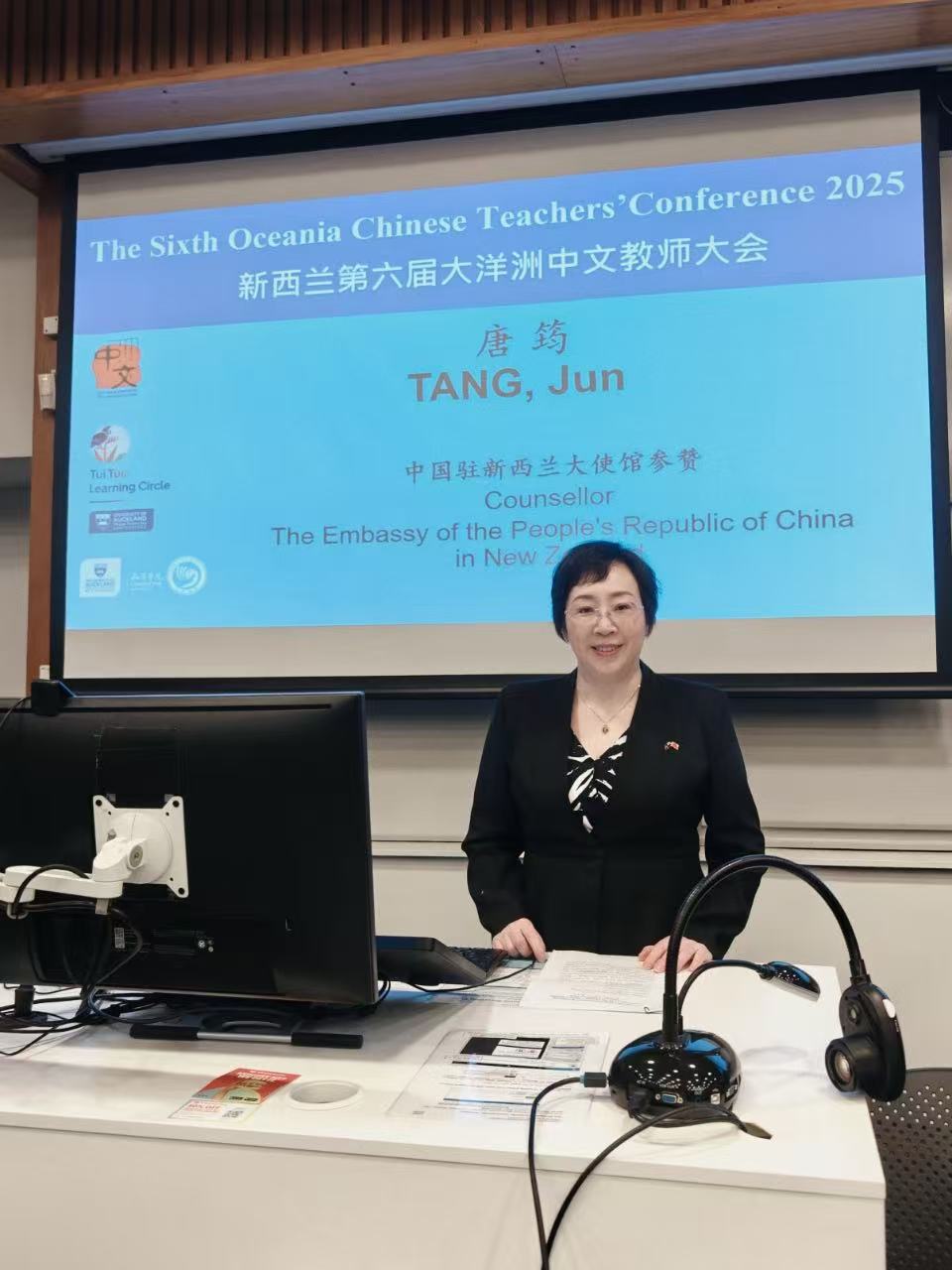
Counsellor Tang noted that in recent years, Chinese language education in New Zealand has flourished because of the joint efforts of the education ministries in both China and New Zealand, as well as the dedication of all parties involved. She especially highlighted the hard work of Chinese language teachers, whose efforts have inspired a growing number of New Zealanders to learn Chinese and gain a deeper understanding of Chinese culture. She expressed the hope that Chinese language teachers in New Zealand will continue to serve as dedicated instructors of the Chinese language, adapting teaching methods to local contexts, exploring innovative approaches, and creating immersive learning environments that allow New Zealand friends to experience the unique charm of Chinese — one of the oldest languages in the world. She encouraged them to be active ambassadors of Chinese culture, showcasing China’s long history and rich culture, and helping learners gain a deeper understanding of the cultural connotations and ways of thinking embedded in the language. She also called on them to be promoters of China–New Zealand friendship, helping New Zealanders gain a true understanding of the Chinese people’s aspiration for peace and development, strengthening mutual trust, and contributing to the steady and healthy growth of China–New Zealand relations.
Counsellor Tang emphasized that over the past five decades, China and New Zealand have set a fine example of win-win cooperation, overcoming differences in social systems, histories and cultures. High-level diplomacy has injected strong momentum into the bilateral relationship. On 20th June, President Xi Jinping met with Prime Minister Christopher Luxon in Beijing, both leaders stressed the need to continue deepening cooperation in trade, tourism, education, and culture, bringing new development opportunities for Chinese language education in New Zealand. Prime Minister Luxon also underscored during his visit to Fudan University that learning each other’s languages plays a vital role in fostering mutual understanding and friendship. These developments present new opportunities for the growth of Chinese language education in New Zealand. She expressed hope that participants would fully seize this conference as an opportunity to share experiences and ideas around the theme, jointly exploring innovative approaches for the development of Chinese language education, and strengthening the foundation of people-to-people exchanges between China and New Zealand.
In her video address, MP Nancy Lu emphasized that language is a key to fostering understanding and trust. She expressed hope that more young Chinese New Zealanders should master the Chinese language to gain a deeper appreciation of their cultural roots. Director Yvonne Lim highlighted the importance of foreign language learning within New Zealand’s multicultural context and reaffirmed her commitment to supporting language educators in enhancing their teaching capabilities and promoting cultural exchange. Director Zhou Xuelin thanked Chinese language teachers for their strong support of the Institute’s initiatives, including the “Chinese Bridge” competition. He noted that the Confucius Institute will continue to support Chinese language education in Auckland, Northland, and Waikato, contributing to community-level cultural exchange. Ms Rebecca Needham outlined the key activities planned for the 2025 New Zealand Chinese Language Week and encouraged participants to actively follow developments in second language education in New Zealand—including Chinese—so as to strengthen New Zealand’s connections with China and the wider world. President Laura Deng presented the background and agenda of this year’s conference. She encouraged teachers to embrace the changes of the times, make effective use of modern technologies to support teaching, help students learn Chinese more effectively, deepen cultural understanding, and grow into globally-minded citizens.
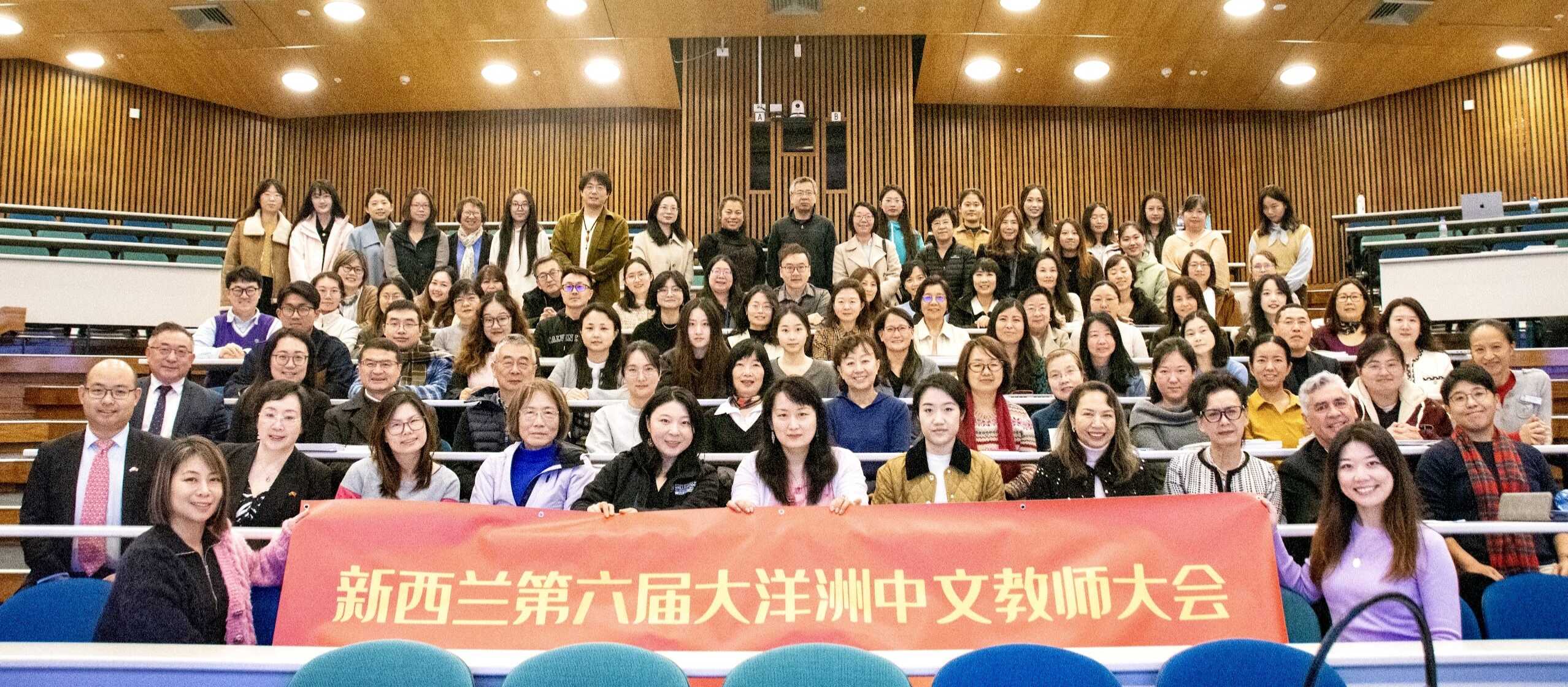
Following the opening ceremony, participating Chinese language teachers took part in 14 workshops under the theme “Embracing Change: Reshaping the Future of Chinese Language Education.” Through lectures, model lessons, and case studies, the workshops provided a platform for experience-sharing and in-depth discussions on the future of Chinese language teaching in New Zealand and the wider Oceania region, particularly in the context of emerging technologies such as artificial intelligence.
The Oceania Chinese Language Teachers’ Conference is held biennially and serves as a key platform for Chinese language educators across the region to exchange ideas and best practices. This year’s conference was co-hosted by the New Zealand Chinese Language Teachers Association, the Tui Tuia Learning Circle at the University of Auckland, and the Confucius Institute in Auckland.